
Sedené is an unusual planet. How to describe it? I’ll paraphrase from the brochure.
Smaller than Earth, but somehow denser with about 120% of the gravity. Its star, a white dwarf, has consumed all its hydrogen and gives off a different light to our Sun. Sedené is in a distant orbit, so light is relatively less, despite the star being much larger than the Sun.
It’s a survivor from a turbulent time in that system. Consequently, it’s a hybrid planet. Part solid core — so you can stand on it, even if it’s a heavy feeling with that instant weight gain — and part pseudo gas planet with its carbon dioxide atmosphere and frozen surface.
Now I am not trying to deter you from visiting, but before you absorb all the marketing, put-it-on-your-bucket-list hype from the (presumably well paid) influencers, I feel I should add some balance to the narrative based on my recent visit there.
I too found it irresistible. The marketing holographs are almost too true to believe, but one must always see it with one’s own eyes. I saved my shekels and booked 9 months in advance — yes, there is a waiting list, and the price is very high — though with the worm gate now on the planet the trip itself is quick. No more months wasted on some interstellar ship as it lumbers through the dark.
Comparisons beg to be made, and I suppose it’s like comparing last century’s sailing ship to a jet plane. They both get you there, but one is faster than the other. I know what I would chose.
For the trip you get fully suited up in the comfort of the Moon Base, which is strangely named being in Nigeria. Something to do with being nearer the equator, better aligned to Sedené. It’s a giant building next to a power station with a cannon like structure pointing to the sky. More about that later.
I digress. If you are claustrophobic then reconsider.
You start with a big feed as there is no eating once the suit is sealed. A straw inside for rehydrating, of course, and toilet connections inside the suit, so prepping is a bit personal. The staff have seen it all and barely notice, but just saying there’s no modesty. Needless to say I avoided the spicy food on offer.
To keep it affordable, a relative term, you’re then packed in like sardines into this capsule thing. You’re in a space suit but body contact is unavoidable. Again, just saying.
Then the capsule is hoisted into, well I don’t know what it’s called, a tokamak maybe. Don’t quote me. It’s not an MRI but it feels like that except there’s two or three of you in the same space. Shut the doors, dim the lights, banging and crashing and jinging and janging and whoosh, a little wobbling, you’re so many light years away.
That makes it sound instantaneous. It’s not, it takes over two hours, with a weird sensation, like you’re sideways or upside down or spinning in a centrifuge. Not dissimilar to a fairground ride, but slower. It settles down, I found myself dozing off towards the end.
When the capsule arrives there’s no one there to meet you. The Voice in the helmet tells you, reminds you, in a plummy Cambridge meets Nigerian accent, of a few salient facts. It’s minus 80 centigrade, don’t take the helmet off, or the gloves, or anything. The worm gate is next to a rock like platform, big steps, don’t trip. It’s nearly sunrise, when that happens so does the magic, the event you’ve come for, the CO2 falls. One more thing, says the voice, it’s not rocks, it’s solid frozen CO2. You can get stuck. If that happens, call on the radio, everyone is connected. If you hear someone is stuck, go to them and press the big red button on the back of their suit. That triggers a heating mechanism in the feet, melts the icy connection. We don’t want to leave someone behind, says the Voice. Finally it says, you’ll weigh about 20% more than on Earth, you will tire quickly, the suits are not flexible. Move slowly, don’t go too far.
How long do we have, someone asks, though we were told before leaving.
One hour, says the Voice. I will call to inform you when to come back to the ship. The journey back is timed, the capsule cannot wait, it is not possible to contact Earth or get a rescue mission. Be careful. Don’t get left behind.
Then the capsule entry opened, slowly revealing the landscape. We tentatively stepped out, unused to being heavier, into the dark. The steps were larger than expected, some had footprints from previous visitors, and it was mostly dark except for the light emerging from the capsule. I looked up, stars but not in patterns I recognised, and I could feel the cold despite the insulation in the suit. Definitely not be taking my helmet off!
It seemed like we plodded around for the first half hour before the Voice announced sunrise was imminent. We didn’t know which way to face, then a bright, tiny, white disc slowly lifted above the horizon, half of the group facing the wrong way.
Through my visor I could barely feel any warmth, but I knew from the brochure it only needed one or two degrees for the evaporation to occur.
The chatting stopped, we all just stared, long shadows as the rocks started to melt, turn into gas, flow around our feet, perhaps gravity, perhaps the merest whiff of atmospheric movement. White, mostly, but a myriad of rainbow colours from reflections through the icy crystals. It was ecstatically, heavenly beautiful.
The Voice reminded us. Don’t stand still, don’t get glued to the rocks, mind your step — as the gas rises you cannot see them, departure in 15 minutes, make your way back to the capsule.
I was mesmerised, so I was the one that got stuck to the rocks. A call for help, a smack on the back, and my feet worked loose so I reluctantly went back to the capsule. Everyone laughing, thankful they didn’t get stuck and left behind, the deadly mist now waist high and rising.
We all squeezed in, did a headcount, the door closed, and did it all in reverse, two hours to get back. Plus, I didn’t realise, twenty minutes getting our suits decontaminated before we could get out of them.
Which was a process. The modesty thing again, except now there was waste material. Still, astronauts do it every day.
Then a debriefing, with another meal, it was over five hours since we last ate. The spicy option for me this time, extra delicious!
A chatty Nigerian ran proceedings, asking what we saw, was it good? Someone asked why was the facility in Nigeria? Good question. Partly equatorial alignment. Partly access to Nigeria’s mining of rare earths, no export permits needed if returned to the country as duty free manufactured goods, in this case electronics and superconducting magnets and things even he wasn’t told about. Partly, wink wink nudge nudge, some secret “expired” NASA patents for which there was no legal recourse, since it was Nigeria. And finally proximity to power, you see the power station next door, we take half their power, charge capacitors for a giant release four times a day.
Four?
Yes two trips, each there and back. Sedené rotates two thirds as fast as Earth, so we can get two sunrises for each day on Earth.
That seems convenient, a skeptic asked.
Not exactly twice as fast, you’ll notice departure times are every 8 hours and 23 minutes apart, so they shift. You were on the sunrise tour, there is also a sunset tour. They alternate. Sunrise is better, he laughed, and we cheered. You also got the sunrise tour leaving in the morning, sometimes it leaves after midnight, those customers are grumpy until they come back.
The next tour is getting ready to go, he looked at his watch. Your driver will take you about a kilometre down the road, where you can get out and look at the next departure.
Which we did, no choice really, it was a slick operation. And should be for the money it cost. You know, if you have to ask the price you can’t afford it.
Anyway, we get off the bus and look back at the facility. There’s a small platform, so we all face the right way. It’s late in the day, evening, as my trip started at the convenient morning time. The sun is down, the sky still light with afternoon clouds building, as they do in the tropics. Going to rain tonight, the driver said, you’re lucky, weather is perfect.
He looked at his watch, 2 minutes he said, watch closely.
We watched. The cannon shaped structure raised up, no doubt adjusting its aim, and settled. Ten lights turned on, then went off one by one, a countdown. In my head, three, two, one, ignition.
A laser beam instantly shot up into the cloud base, followed seconds later by the most amazing electrical discharge I have ever seen. Like a lightning bolt, but upside down, narrow at the bottom then sparking into the clouds, as if all hell had been released.
The speed of sound through air is roughly 350 metres per second in warmer air, and three seconds later a shockwave of sound hit us. Freaking awesome!
After that the airport hotel, the flight home, everything seemed so boringly normal.
I was talking about this for days afterwards, probably encouraged a few of my acquaintances to visit Nigeria.
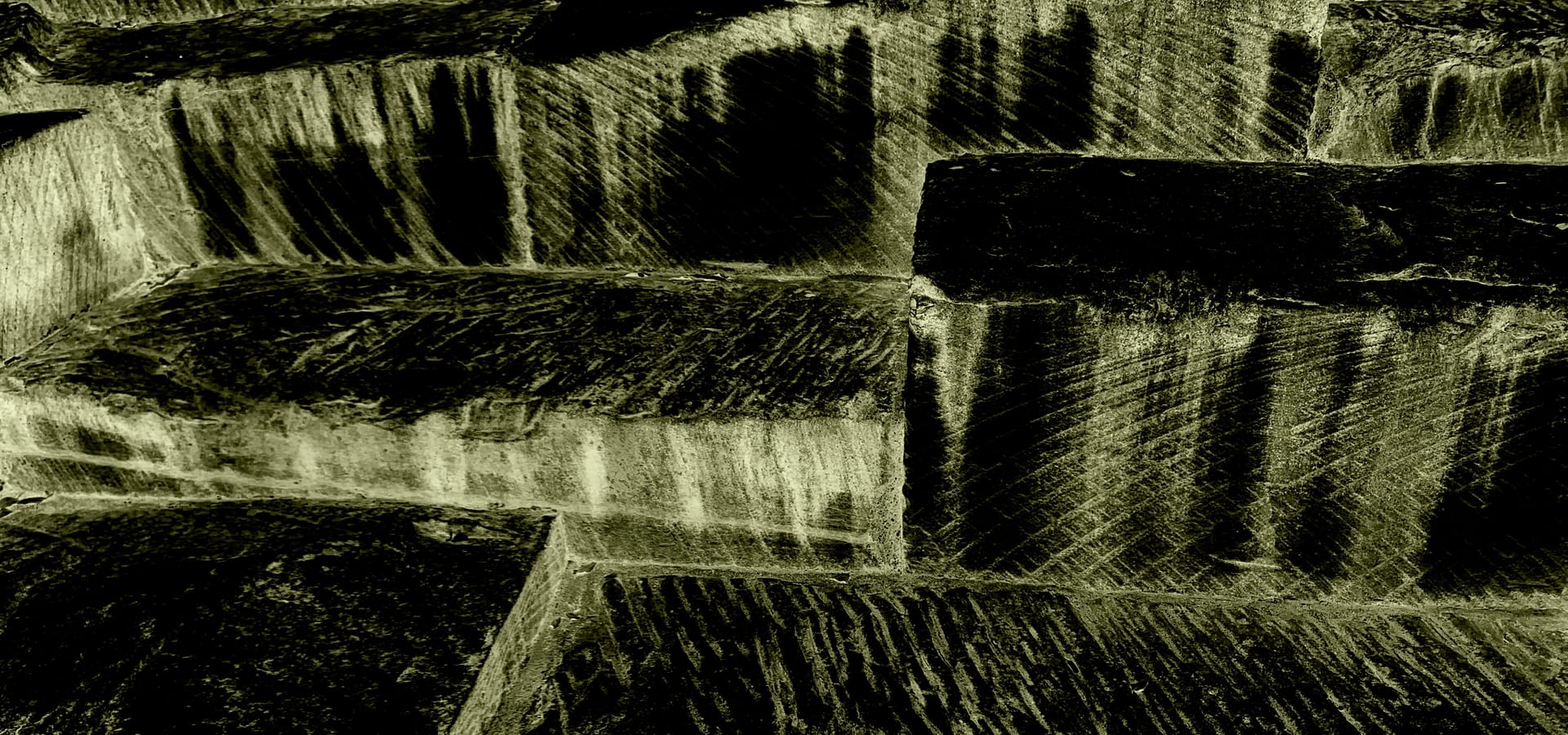
Recently I thought I should write down my experience before I forgot what a great trip I had. Somehow, I had no photos, not even one from the souvenir shop, except the crappy one above, so I needed to remember.
Propelled by a laser beam to the stars, visiting an uninhabited planet, the swirling gases leeching out of the ground, falling over the rocks, sparkling in the dawn light, death a step away. So many highlights.
Then as I wrote these words I realised everything I had experienced could be replicated in a movie studio, as a customer experience, even the cold (yes it was definitely supercold!) could be refrigeration, the CO2 was real, as was the final electrical discharge, the extra gravity could be metal shoes and an underfloor electromagnet, easy to adjust the stickiness — and release in my case. No windows in the capsule, no views. Sunrise and stars, easily electric lighting in a dark room. The more I recalled the more I realised; for example, there was no docking station on Sedené, it was just the capsule on the ground. What sent it back to Earth, suction?
A simple interweb search. How much energy would it take to send 10 people in a capsule, say 2000kg, to a planet how many light years away, in 3 hours? I didn’t know the star, Procyon is the closest white dwarf at 11 light years. And back again, so twice.
Half the output of a Nigerian power station? More, much more. Foolish foolish me.
The Nigerian Scam had well and truly modernised and taken me for a ride.
And I loved every single minute of it!
Published in Medium 17 May 2025