
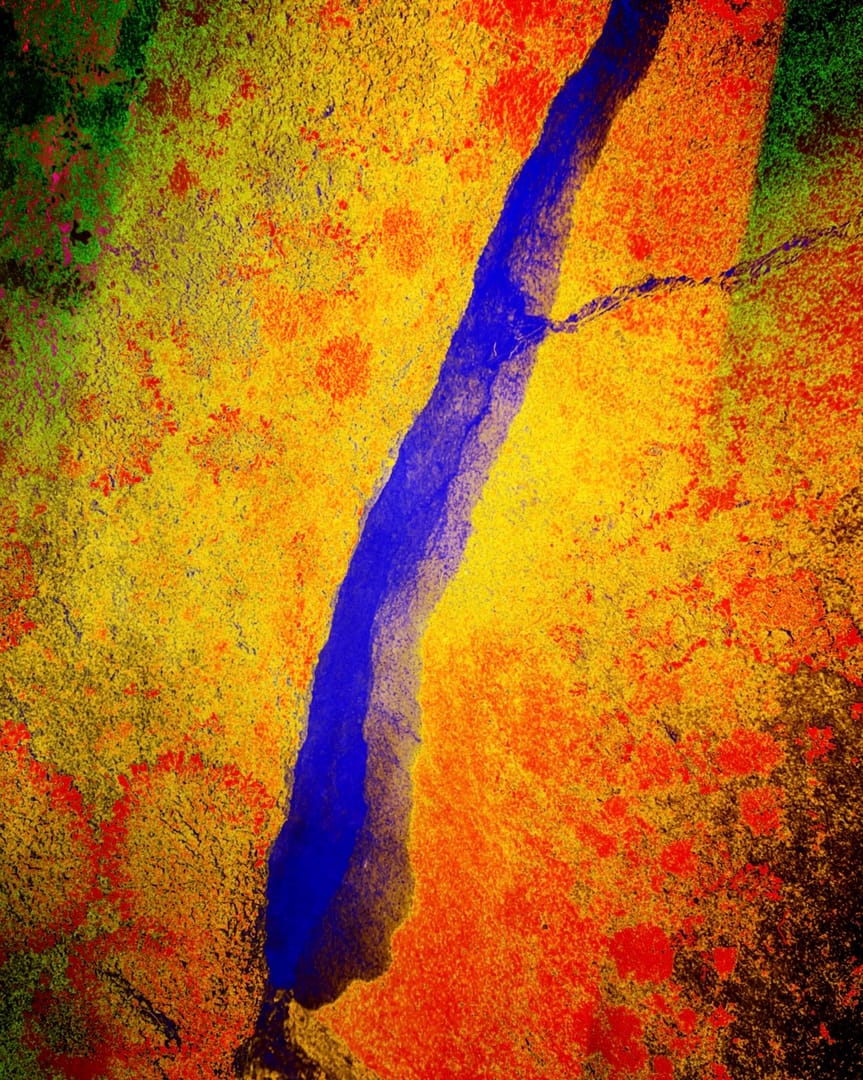
Mercury, closest to the sun, was always expected to be sunburnt, cracked and full of surprises.
Early Mariner flybys did not dispel this line of thinking, returned data suggesting a moon like surface, little atmosphere and extremes of day and night temperatures. When rock heats up and cools down so suddenly, then cracks will appear. It could not be otherwise.
The later Messenger and BepiColombo visits added more detail, especially visual imagery. A molten core and volcanically formed craters and plains were no surprises.
But such conditions also create unusual mineral combinations, and mankind, ever curious, felt it should have a look in case there was something of interest. Life was probably out of the question, the absence of water a giveaway, at least for life as we know it. But diamonds and gold and precious metals could just be lying on the surface. Unlikely, but not impossible.
Only one way to find out, and that was to send a machine on a one way mission. Even mad dogs and Englishmen would find it too hot.
One does just not jump into a boiling hot bath unprepared, and so it is with mining on somewhere as hot as Mercury, with its 600 degree temperature fluctuations between day and night, though a full rotation takes longer than its year. We had not got too close yet, it’s hard enough getting a stable orbit due to the Sun’s proximity and strong gravity. And don’t talk about landing, with no atmosphere and the Sun’s gravity, it needs more energy to land than go to Pluto, equally uninviting but much further away from Earth.
Stage One of the project was an aerial survey. Improvements in technology meant we could get more instruments into a small package, the bigger challenge being insulation from the ever so close Sun, and its higher levels of radiation.
A polar orbit meant the satellite was always hot, which was easier to manage. The idea was this would, after three months or so, provide a full surface map with detail provided by the long shadows of dawn and dusk as they slowly moved across the surface.
Scanning in multiple frequencies would augment our preferred visible light views. In false colour image tones could be exaggerated. A bold venture, certainly.
The first three month’s survey had defined features of interest, the general surface geography that could be narrowed down to specific targets. The satellite had worked flawlessly to date and a full surface map resulted. Coming into the second Mercurial year it was time to examine anything that was interesting.
Pattern recognition was something computers now did well. Millions of images could be stitched together and analysed. Unusual geography could give hints to the formation of the Solar System, the planets, our cosmic past. The bonus would be uncommon minerals that have formed as a result of those endless cycles of searing heat and near-absolute cold, and the experience of working in extreme conditions.
The computer identified something of interest. A paradox, as it were. When this image was flagged by the AI, a segment of a larger frame, the scientists at first thought it was a false colour image.
When it wasn’t, they asked why a crevasse would show the inside of the planet as blue. At the same time, the ion readings were unusual, unaccounted for by magnetospheric effects or the ring current previously measured.
From months of surveying, this was not repeated anywhere else. An outlier, so unusual that they had to come back for another look.
Skeptics called it another Cydonia. Minerologists called it exciting, the find of the century. Extraterrestrialists called it vindication. The science team called it something to investigate further.
They tweaked the satellite’s orbit so it would pass directly overhead two months later. Not slightly to one side, but directly overhead. To try and look down into the crevasse.
It would be hard to see, Mercury’s rotation would have the Sun at an oblique angle, so there would be shadow. But shadow would of itself provide information. Was the blue a reflection of the sides of the crevasse, or a colour from the depths? Refracted light, or generated by some unknown process?
Two months later, the team watched the readouts expectantly. Scanning in all frequencies, gather as much information as possible.
A brief window.
The signal went dark, the satellite never returned any more data, did not respond to commands.
Technique: #digital
Theme: #abstract
Highlight colour: #red #yellow #purple
Series: #mini-sci-fi